Booking a customer focus speaker: what should you look for?
Organising a kick-off, customer event or conference and looking for a speaker on customer focus, customer experience or sales? Six things to look for, and what to sort out yourself beforehand.
- A good speaker on customer focus has done it themselves, tells their own stories and gives your audience something to do tomorrow.
- Look at interaction, whether the talk fits your audience and what happens after the event.
- Decide the goal, the audience and the length yourself beforehand. Then a speaker can make a tailored proposal.
A good speaker on customer focus has had customers of their own, tells stories they have lived through, and makes sure your audience knows afterwards what they will do differently tomorrow. A great story is nice. An audience that treats customers differently on Monday is what you book a speaker for.
I speak at kick-offs, customer events and conferences about customer focus, customer experience and sales. Below I set out what to look for as an organiser, even if you end up choosing someone else.
What does a customer focus speaker bring your audience?
Everyone in your audience shapes what the customer experiences. The salesperson, the planner, the colleague in accounts, the board. Many of them just do not realise it.
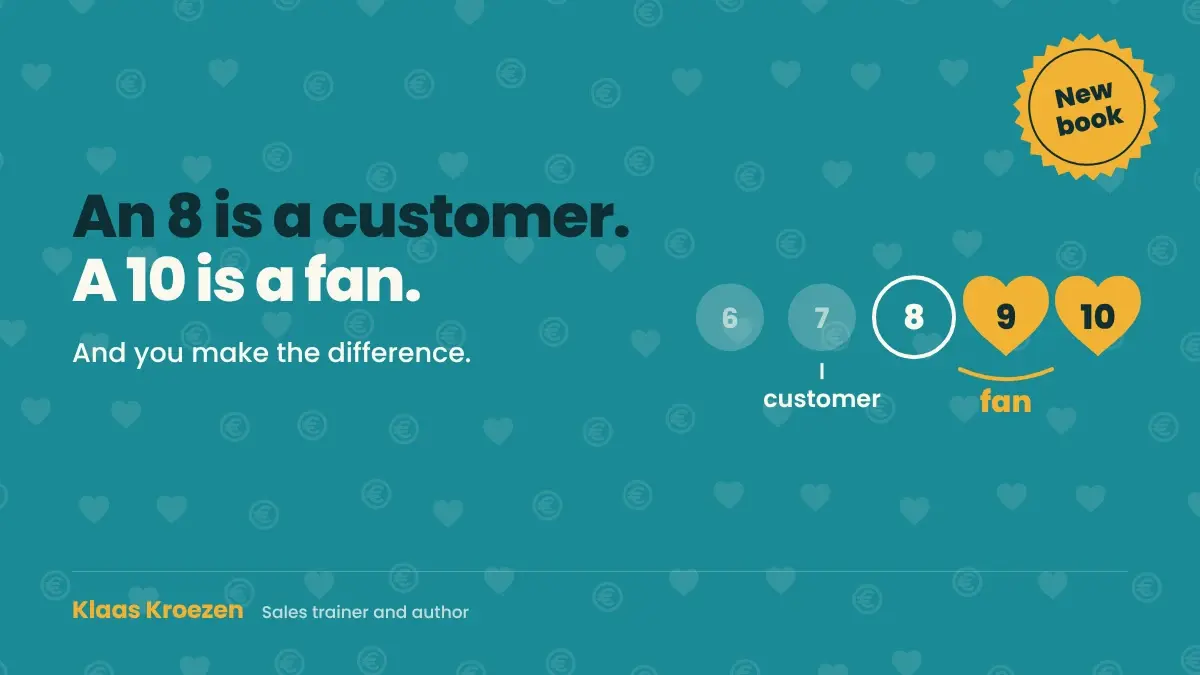
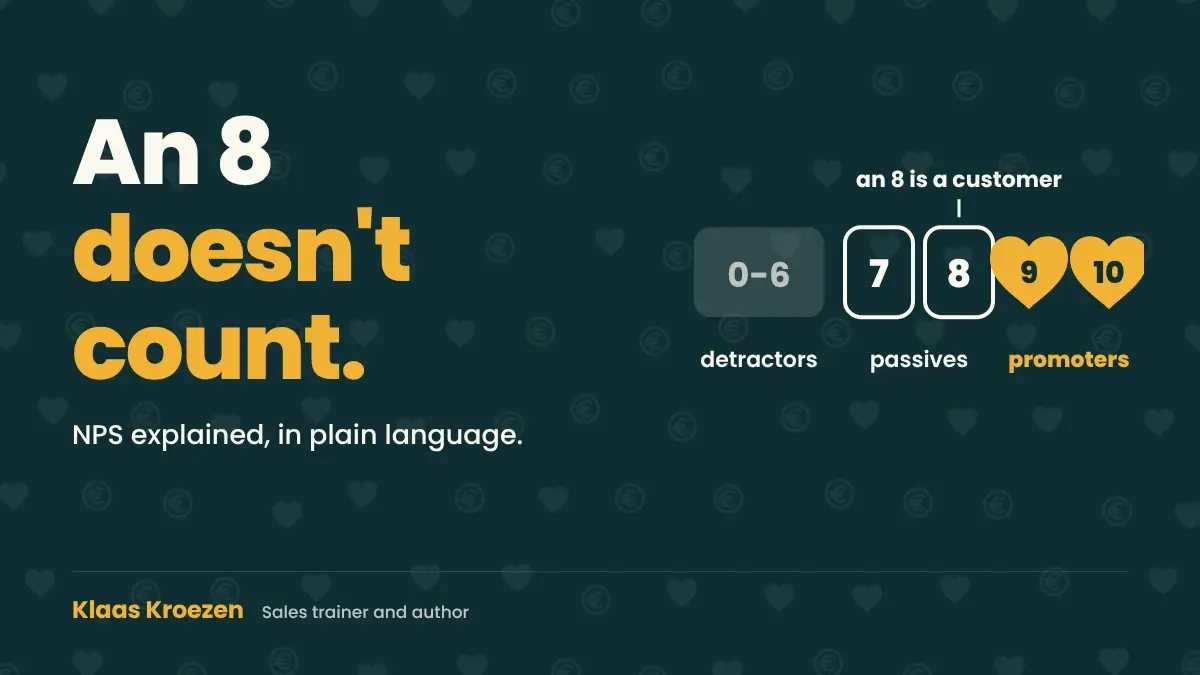
A good speaker shows them. Afterwards people look at their own work differently. And you have a shared language: everyone knows what is meant by "an 8 is a customer, a 9 or 10 is a fan".
Six things to look for
Has the speaker done it themselves? Talking about customer focus is easy. Ask what someone has built. I have been an entrepreneur for more than 25 years, and in 2008 I set up a customer research agency with my brother. It grew to 21 countries, working for clients such as Google, Samsung, Microsoft, Bol and ING. What I share on stage comes from my own businesses.
Does the speaker have their own research and stories? For fifteen years my agency followed hundreds of thousands of customers going through a real customer journey. Two things always weighed most: trust, and the feeling of being taken by the hand. Insights like that stick because they come from practice. Check whether a speaker mostly quotes other people, or has stories of their own. Alongside my own work, I like to use research by Bain & Company: 80 per cent of 362 companies believed they delivered a superior customer experience. Only 8 per cent of their customers agreed.
Does the audience take part? An hour of listening is a long time. Ask how the speaker involves the room. I ask people, for example, to tell the person next to them about the best customer experience they ever had as a consumer, and then the worst. Everyone has a story. Then I ask: how do we want our customers to talk about us? An audience that talks remembers more.
Do people go home with something to do tomorrow? Ask the speaker what the audience will do differently the next day. One concrete example from my talk: the empty chair. At Amazon, a chair at meetings is kept for the customer. Put one in your next meeting and ask: what would he think of this? Anyone can do that on Monday.
Does it fit your audience? A room full of account managers needs something different from a room with the whole organisation, from the workshop to the board. Ask the speaker how they tailor the talk to your people. I always want to know beforehand who will be in the room and what they do every day.
Is there a follow-up? After the event, the daily grind takes over again. Ask what is possible afterwards. With me, that can be a book for every participant, the free Customer Experience Model scan, or an inspiration session or training with a team. Then the event becomes a beginning rather than a one-off afternoon.
What topics do I speak about?
| Topic | What it is about | Suits |
|---|---|---|
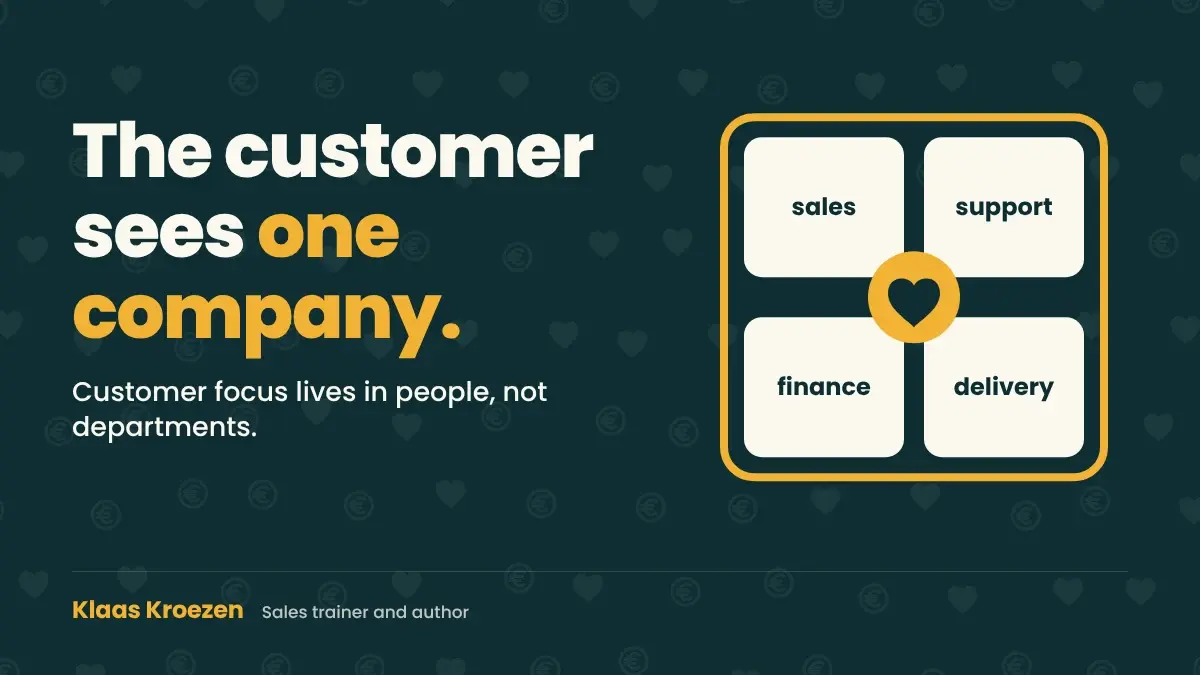
| Fans are made together: fewer walls | Your customer does not see departments, he sees one company. Wherever work is thrown over the wall, you lose fans. | Kick-offs, customer events, conferences |
| From customer to fan | An 8 is a customer, a 9 or 10 is a fan. How your whole team turns satisfied customers into fans. | Everyone who shapes the customer experience |
| Sales, Honest & Relaxed | Selling that feels good, for you and your customer. More revenue with less pressure. | Sales and account teams |
The most requested is Fans are made together. My message there is simple: you do not make fans on your own, you make fans together. Look at where the walls and islands are in your company, and make them smaller.
From customer to fan is based on my new Dutch book Van klant naar fan (From customer to fan). Sales, Honest & Relaxed comes from my first book, the Dutch number 1 bestseller of the same name.
What do you sort out as an organiser beforehand?
A speaker can only make a good proposal once you know three things.
The goal. What should be different after the event? "An inspiring closing act" is not a goal. "Sales and service seeing one customer journey together" is.
The audience. Who is in the room, how many people, and in which roles? Do they know each other? Is it your own team, or your customers?
The length and the slot in the programme. An opening needs something different from the slot after lunch. Agree as well whether there is room for interaction, and whether there will be a follow-up.
A tip I often give organisers: let the speaker talk to a few people from the audience beforehand. Then you hear your own customers and your own examples back on stage.
What does a speaker cost?
For talks at events I work with a tailored proposal, because every event is different. For an inspiration session with your own team the prices are fixed; you will find them on the speaker page.
A team leader at Budget Thuis said after a session: "The team was super enthusiastic. Lots of interaction, an open and pleasant atmosphere." That is what I want for your audience too.
Organising an event? Send me the date, the audience and what you want to achieve. I will make you a proposal.
You do not make fans on your own. You make fans together.
Frequently asked questions
What should you look for when booking a speaker on customer focus?
Choose someone who has done it themselves, with their own stories and research. Look at interaction with the audience, whether it suits your people and whether they know afterwards what they will do differently tomorrow.
How much does a customer focus speaker cost?
It varies by speaker, event and length. For talks at events, Klaas Kroezen works with a tailored proposal: you tell him the date, the audience and the goal, and he makes a proposal.
What topics does Klaas Kroezen speak about?
He speaks about Fans are made together (fewer walls between departments), From customer to fan (turning satisfied customers into fans with the whole team) and Sales, Honest & Relaxed (selling that feels good for you and your customer).
How do you make a kick-off keynote stick?
Give the speaker a clear goal beforehand, let the audience take part instead of only listening, and plan something for afterwards, such as a book for everyone, a scan or a follow-up session with the team.
What is the difference between a speaker and an inspiration session?
A speaker takes a large group along in one go, for example at a conference or kick-off. An inspiration session is smaller, ideally 12 to 15 people, and works with the team's own customers and customer journey.
Read also

Klaas Kroezen is an entrepreneur who trains, coaches and speaks. He wrote the #1 Dutch bestseller Sales, Honest & Relaxed and the new book Van klant naar fan (From customer to fan, November 2026). After 25+ years in sales with his own international market research firm, he helps organisations adopt the From customer to fan mindset: selling honestly and relaxed, and turning customers into fans with the whole team.
More about Klaas