Why discount campaigns cost you both your margin and your dignity
Giving a discount to save the quarter looks smart but teaches customers to wait for your next gap. Discover what discounts really cost and what works.
- A discount campaign tells your customer two things: the normal price was apparently negotiable, and waiting for the next one pays off.
- Price is the only part of your offer a customer can compare in one second; steer the conversation there and you are saying you do not stand out on value.
- Moving on price is fine, but trade instead of dropping: a longer commitment, larger volume, a case study or an introduction.
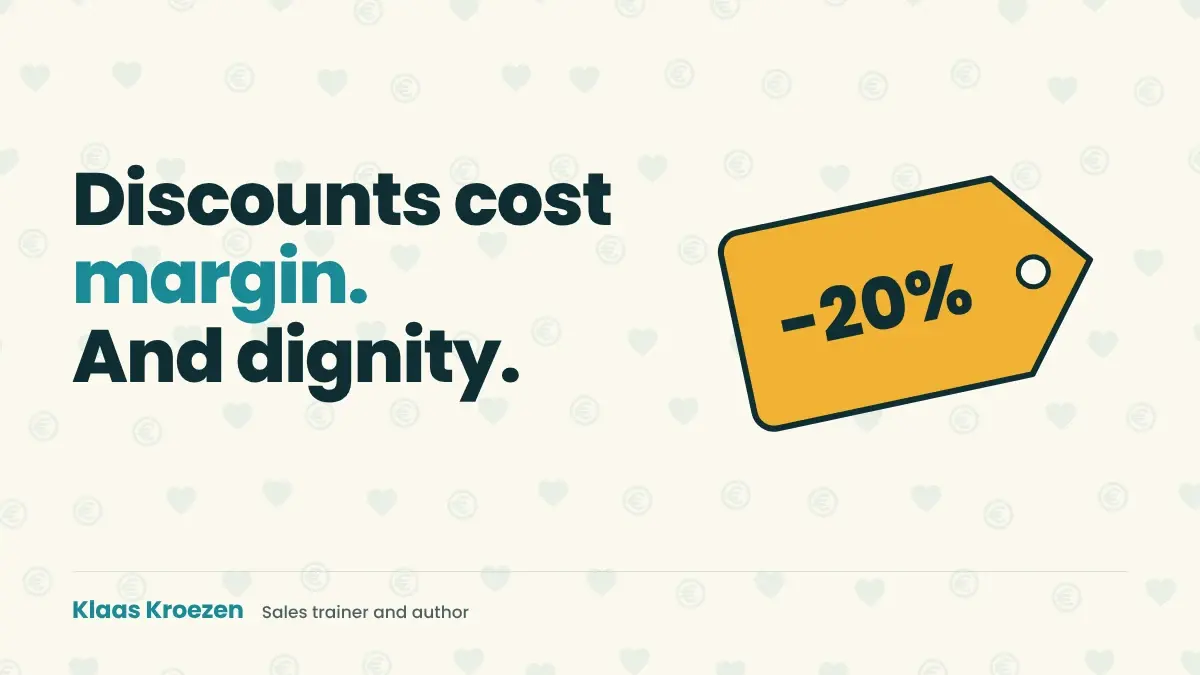
End of the quarter, there is still a gap in the numbers, and there it comes: the discount campaign. Just quickly bring in a few deals. It feels like decisiveness, but a seasoned sales professional recently summed up in one sentence what really happens: "That is your margin, your dignity and everything gone."
What giving a discount teaches the customer
Look at what you are actually telling the customer. "I have a hole in my budget, will you fill it?" The customer hears two things. One: the normal price was apparently negotiable. Two: if I wait until the end of the next quarter, another campaign like this will come along. In a single offer you have trained him never to pay the full price again. And you have reversed the roles: you asked him to help you, instead of the other way around. That is what that professional meant by dignity: you make yourself small at the very moment you want to be the valuable adviser.
The deeper damage sits in your positioning. Price is the only aspect of your offer a customer can compare in a single second. The moment you steer the conversation towards price, you implicitly say: on value I do not stand out enough. Whereas the whole game is precisely to talk about value: what does it solve, what does it deliver, what does it cost to not do it?
Does this mean you can never give a discount?
Does this mean you may never move on price? Of course you may, but trade instead of dropping. A longer collaboration, a larger volume, a case study or introduction in return: then a lower price has a reason and your value stays intact. And dare to defend the investment by placing it next to the result. Whoever makes their value clear does not need to defend their price; it simply adds up.
Preventing the quarterly gap without discounts
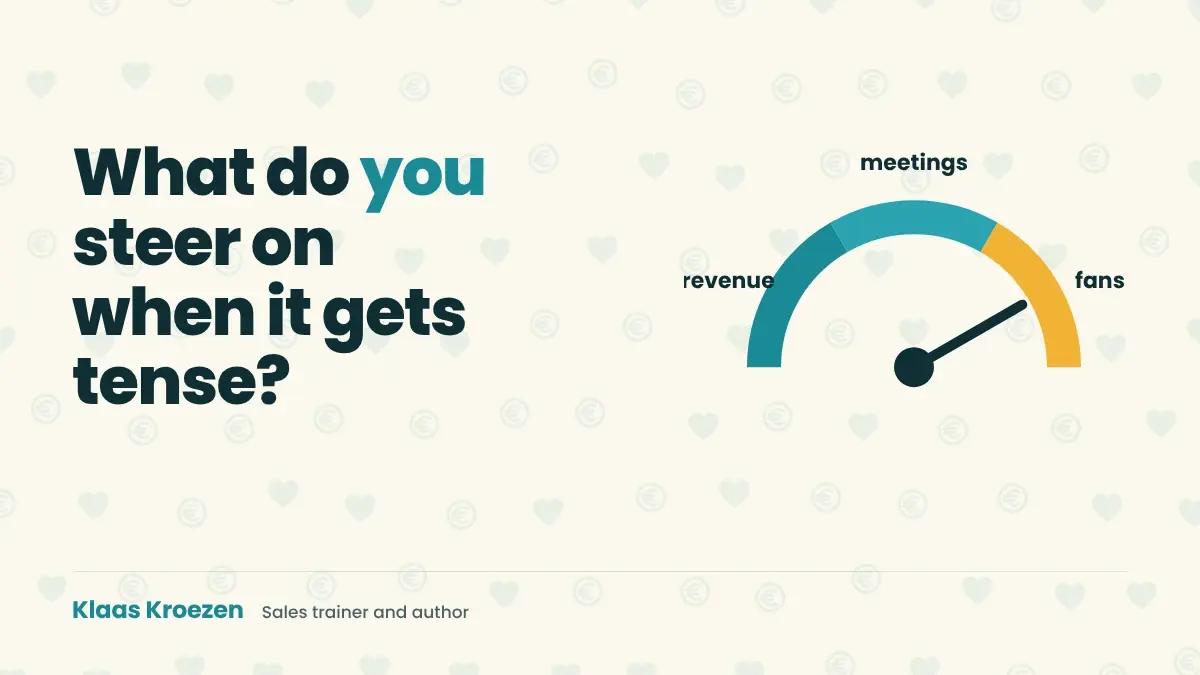
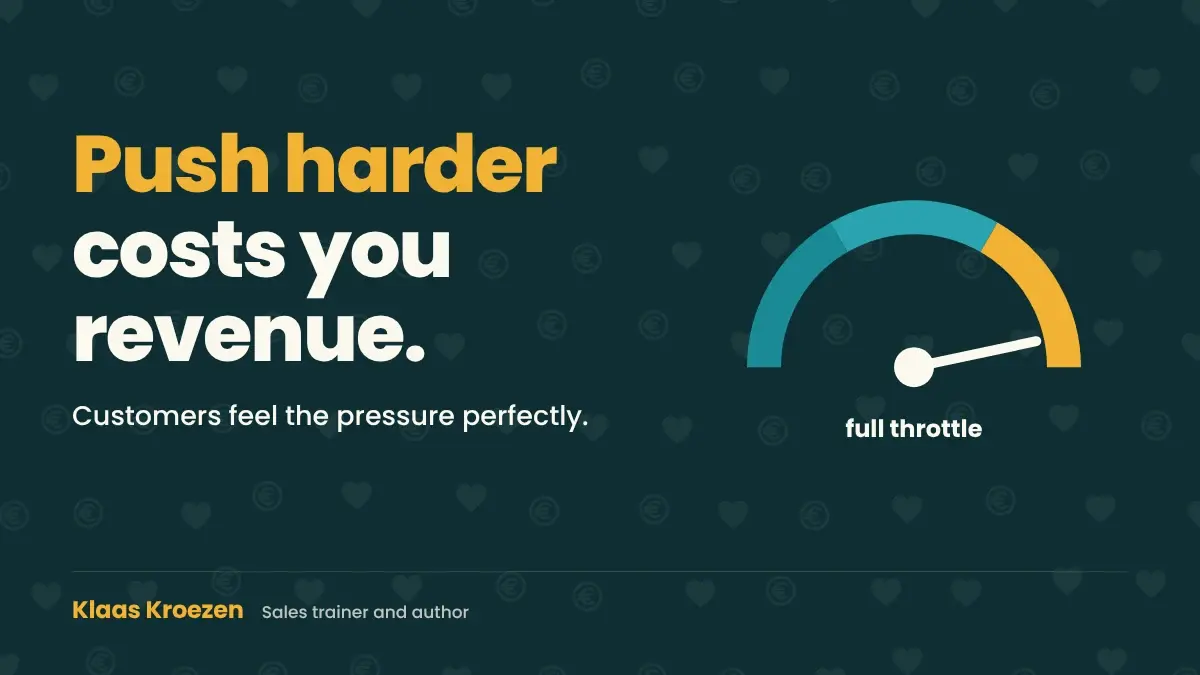
And what about that quarterly gap? You prevent it with a healthy funnel: steering weekly on good appointments instead of monthly firefighting. Why that pressure is the problem itself, you can read in target pressure. How to deal with a customer who says "too expensive", without giving a discount, I will cover in depth soon. The short answer lies in your beliefs: do you yourself believe your price matches your value? Ask yourself that question before you start the next discount campaign.
Frequently asked questions
Is giving a discount a good idea?
Rarely. It tells your customer two things: the normal price was apparently negotiable, and waiting for the next campaign pays off. You have trained them never to pay full price again.
What do you do instead of giving a discount?
Trade instead of dropping. A longer commitment, a larger volume, a case study or an introduction in return: then a lower price has a reason and your value stays intact.
How do you avoid end-of-quarter discounting?
With a healthy funnel. Steer weekly on the number of good appointments instead of monthly on the gap in the numbers, and you will not have to rescue the quarter with your margin.
Read also

Klaas Kroezen is an entrepreneur who trains, coaches and speaks. He wrote the #1 Dutch bestseller Sales, Honest & Relaxed and the new book Van klant naar fan (From customer to fan, November 2026). After 25+ years in sales with his own international market research firm, he helps organisations adopt the From customer to fan mindset: selling honestly and relaxed, and turning customers into fans with the whole team.
More about Klaas