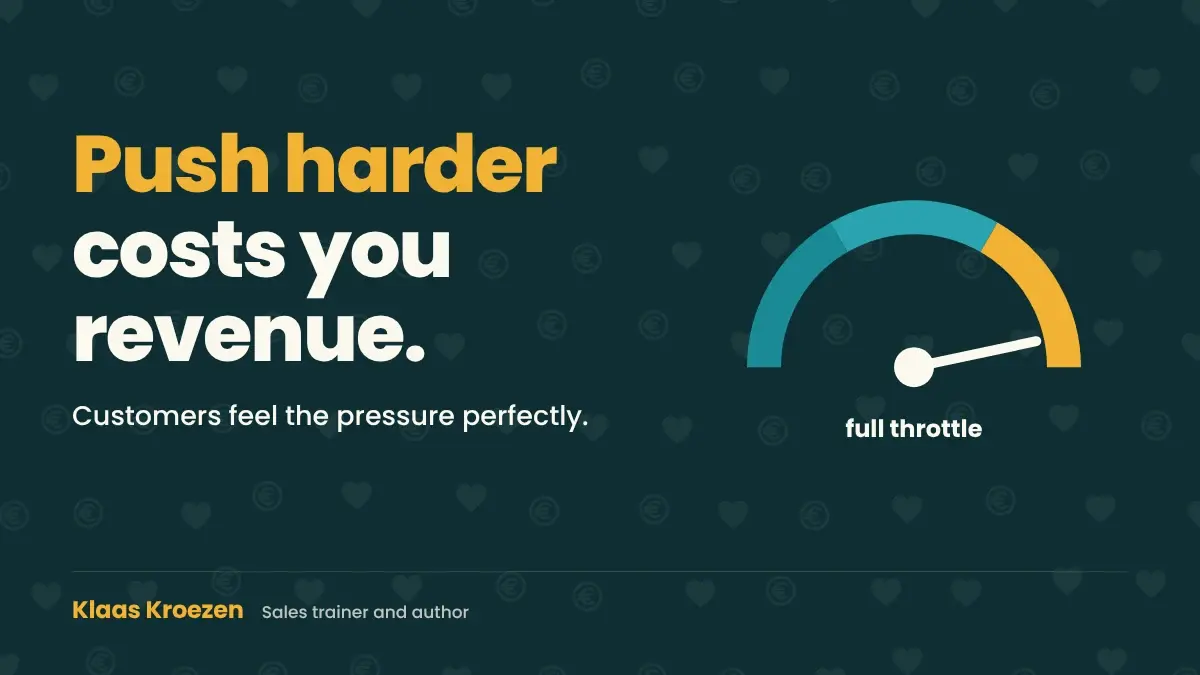
Target pressure: why "push harder" actually costs you revenue
Monthly pressure feels decisive but activates exactly the behaviour that drives customers away. Discover what target pressure really does, and what actually works.
- Target pressure feels like decisiveness, but it activates exactly the wrong thing: the focus shifts from the customer to the gap in the forecast.
- Customers sense that internal energy instantly, and nobody enjoys buying from someone who is pushing.
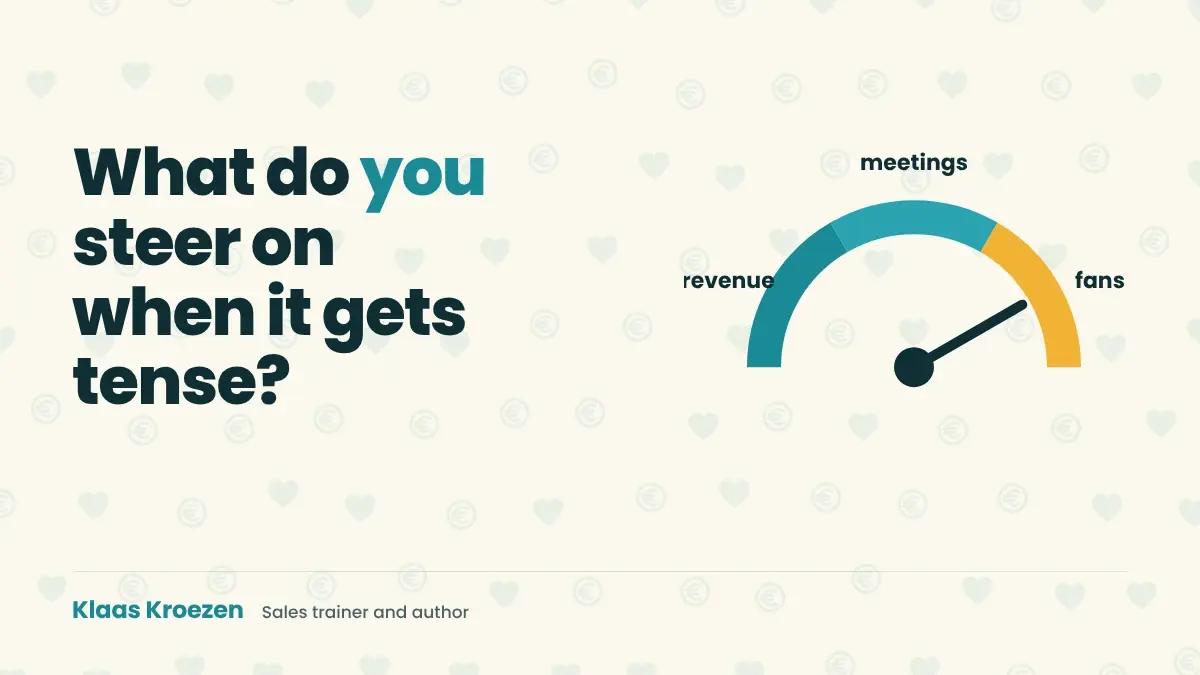
- Results are an outcome, not a dial: steer on the number of good appointments, the quality of the conversations, and whether customers become fans.
A car dealer who still has to shift ten cars at the end of the quarter to hit quota. You know the picture, and you feel straight away what it does: unease. In the salesperson, and in every customer who walks into the showroom that week.
That is target pressure in a nutshell. And the nasty part is: it feels like decisiveness. The numbers disappoint, so management steps in. Push harder, extra rounds of calls, maybe a discount campaign to close the gap. Everyone is doing something, so it looks like there is steering going on. But look at what actually happens, and you see that the pressure activates exactly the wrong thing.
What target pressure does to your people
In your people, the focus shifts from the customer to the gap in the forecast. They unconsciously select a tense, pushy version of themselves. Their language changes: "can we still sign this month?" instead of "where do you want to go?". And customers sense that inner energy without fail, just as you sense it when someone is trying to foist something on you. Ask yourself: have you ever enjoyed buying from someone who was pushing? Exactly. Neither have your customers.
Why discount campaigns cost you margin
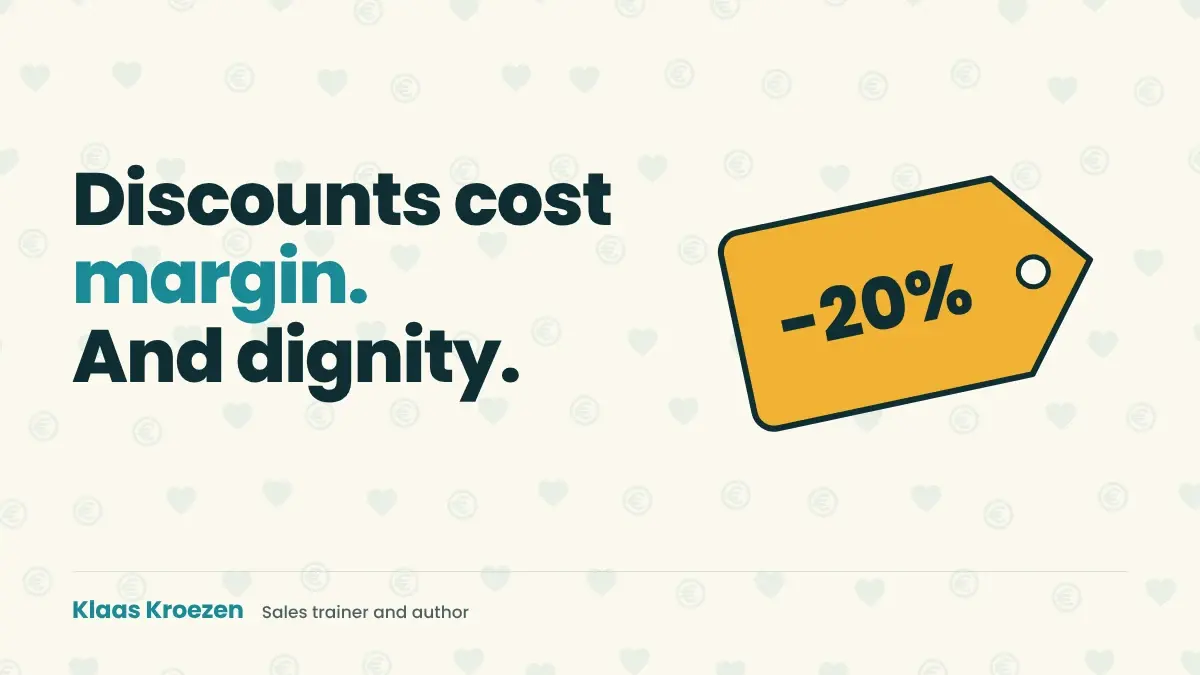
And the discount campaign to save the quarter? It mainly teaches your customer to wait for the next hole in your budget. Goodbye margin, goodbye dignity.
Steer on what you can actually influence
Does this mean results do not count? On the contrary. But a result is an outcome, not a dial you can turn. What forms in the pipeline today only becomes revenue three to six months from now. If you want to steer, steer on what you can actually influence: the number of good appointments (count them weekly with the team, no appointment no deal), the quality of the conversations, and whether customers become fans. I know that pressure myself: in my own company the salaries had to be paid every month. What gave me calm was one number I controlled every week: the number of appointments. That way you build a system, and depend less on luck. And a system brings calm, while firefighting only produces more panic.
How to turn the wheel as a leader is in changing your sales culture starts at the top. Take a look at your own dashboard today. How much of what is on it can you actually influence this week?
Read also

Klaas Kroezen is an entrepreneur who trains, coaches and speaks. He wrote the #1 Dutch bestseller Sales, Honest & Relaxed and the new book Van klant naar fan (From customer to fan, November 2026). After 25+ years in sales with his own international market research firm, he helps organisations adopt the From customer to fan mindset: selling honestly and relaxed, and turning customers into fans with the whole team.
More about Klaas