From one euro to three: getting more from your existing customers
A customer's first euro is not the end but the beginning. Read how customer retention and fans turn one euro into three, without pushing.
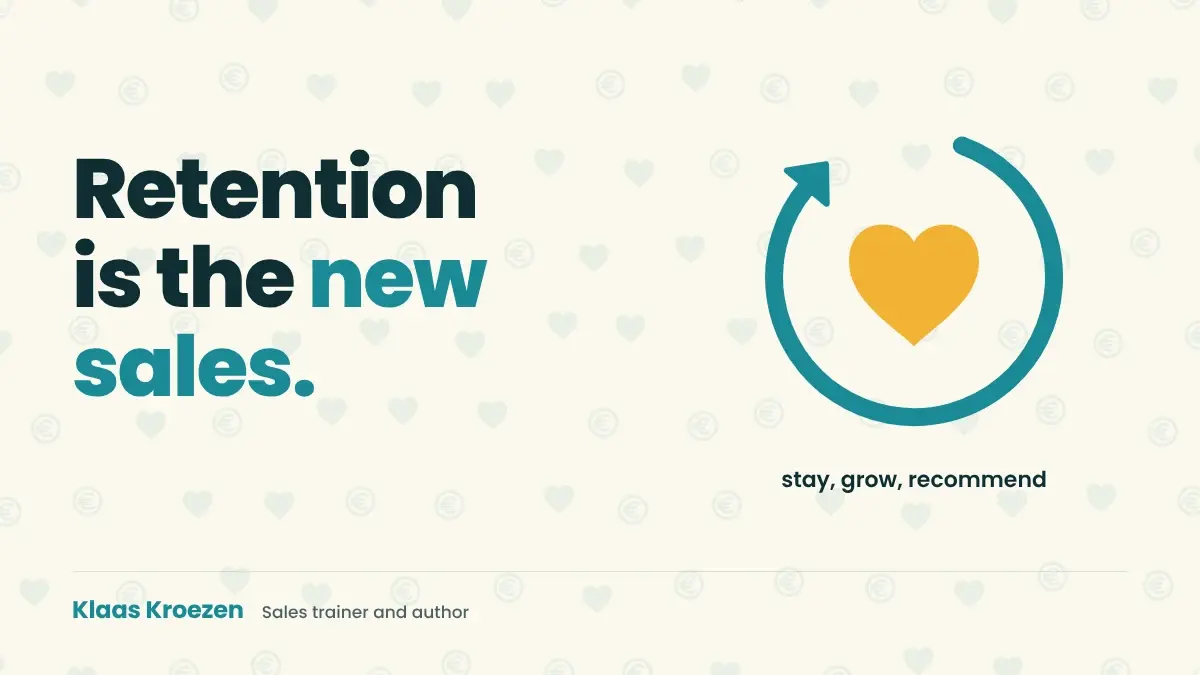
- Turning one euro into three means more revenue from existing customers, because they stay, expand and recommend you.
- A fan grows by themselves and also brings in new customers, with a head start in trust.
- Growth from existing customers comes from helping well. Upselling for its own sake damages the very trust you need.
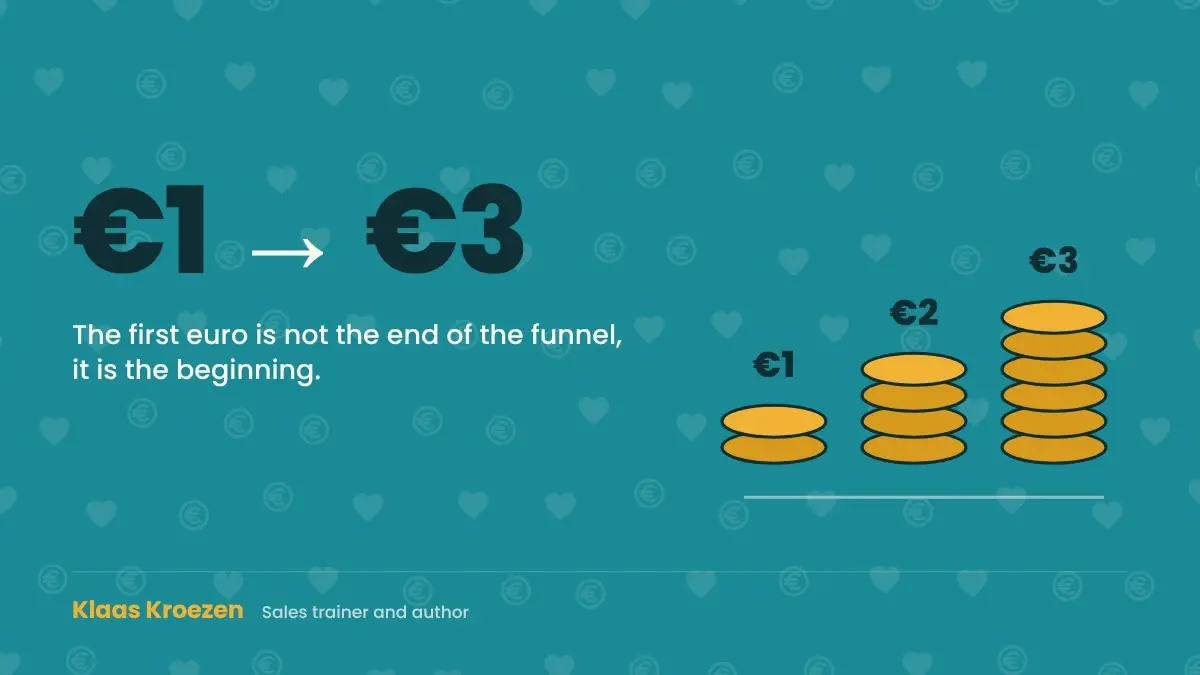
Turning one euro into three means getting more revenue from the customers you already have. They stay longer, buy more and recommend you to others. You get there by helping them so well that growing together simply feels logical.
Why does almost everyone only look at new customers?
Most companies are busy chasing new customers. New leads, new logos, new signatures. That is fun, too. A new customer feels like a win.
Meanwhile the biggest opportunity often lies elsewhere: with the customers you already have. A customer's first euro is not the end of the funnel. It is the beginning.
So the real question is: how do you turn that one euro into three?
What is customer retention worth?
Fred Reichheld of Bain & Company studied, together with Earl Sasser, what happens when companies lose fewer customers. Their conclusion, published in 1990: losing five percent fewer customers led to 25 to 85 percent more profit in the industries they studied. Not revenue. Profit.
That sounds big, but it is easy to understand. A customer who stays already knows you. You do not have to convince them again. They know how you work, and you know what they need. Every extra month, every extra project is revenue without the cost of winning a new customer. And that cost is high: according to Harvard Business Review, winning a new customer costs 5 to 25 times as much as keeping an existing one.
Why upselling often feels wrong
The easy answer to "more from existing customers" is: sell harder to them. An extra module here, a bigger package there.
That rarely works. Customers feel upselling for its own sake straight away. They think: they see me as a wallet. And that damages the very trust your growth depends on.
In 25 years in sales I have seen that the best customers hardly ever started big. They started with something small. They grew because they were helped so well that expanding was the logical next step. That is called land and expand, and it only works when the customer experiences success.
Where do those three euros come from?
Growth from existing customers comes from three sources. Each one asks something different of you.
| Source of growth | What the customer does | What it asks of you |
|---|---|---|
| Staying longer | They renew, year after year | Keeping your promise, every time |
| Buying more | They expand to other teams or services | Showing what your work has delivered |
| Recommending | They bring others along | Helping them so well they become a fan |
That last one is most often forgotten. A fan does not only grow themselves. They also come back into your funnel as someone who brings in new customers. Those are warm leads, with an enormous head start in trust.
How do you grow existing customers without pushing?
These are the steps I take myself and teach teams:
- Get the first weeks right. The period after the deal shapes a lot. Make sure the start goes well and take the customer by the hand. They should always know what the next step is.
- Agree what success looks like. Ask at the start: when will you be happy with us a year from now? Write it down.
- Look back together regularly. Schedule a conversation a few times a year about what it has delivered. Not a sales pitch, just an honest review.
- Look ahead together. In that conversation the opportunities often come up by themselves. Often the customer asks for them. Then you are their adviser, not a salesperson.
- Ask for a recommendation when things go well. A happy customer is glad to help. Make it concrete: "Who would you recommend us to?"
Mitchel Welling of WRA Juristen did exactly this. He helps people facing dismissal, a tough process. He put everything into making fans: closing a case well, with a gift box and a personal card at the end. He now has well over a hundred Google reviews averaging 4.9, and his revenue grew sixfold in a year.
How do you know whether a customer will grow?
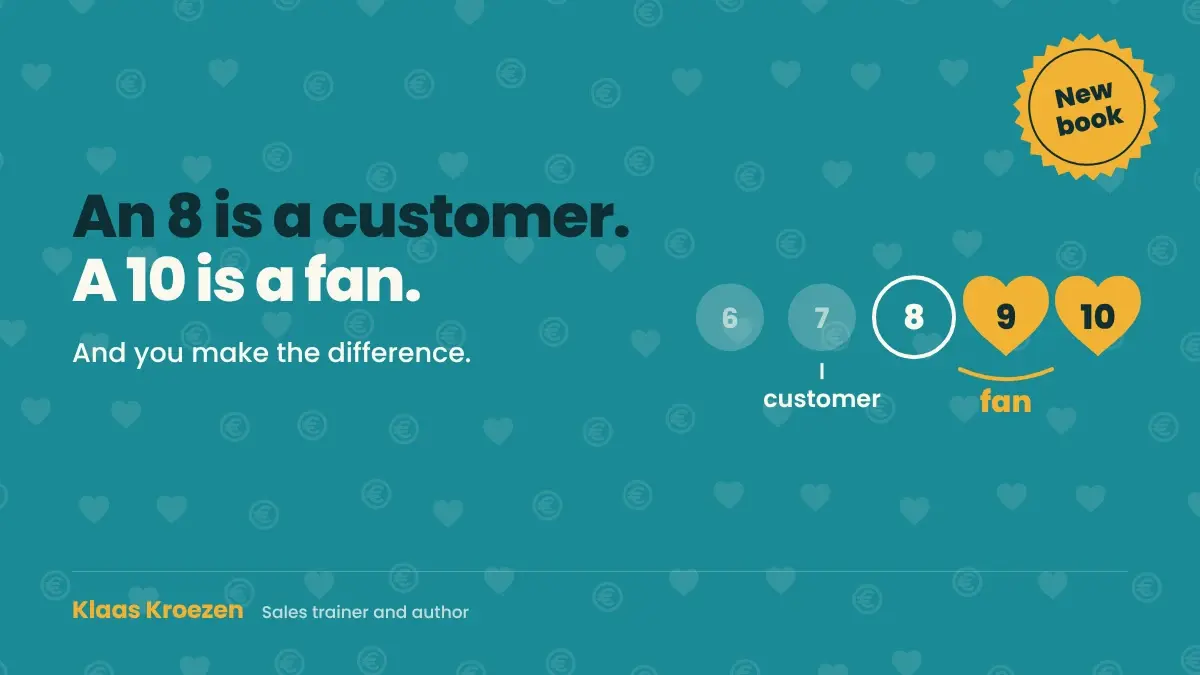
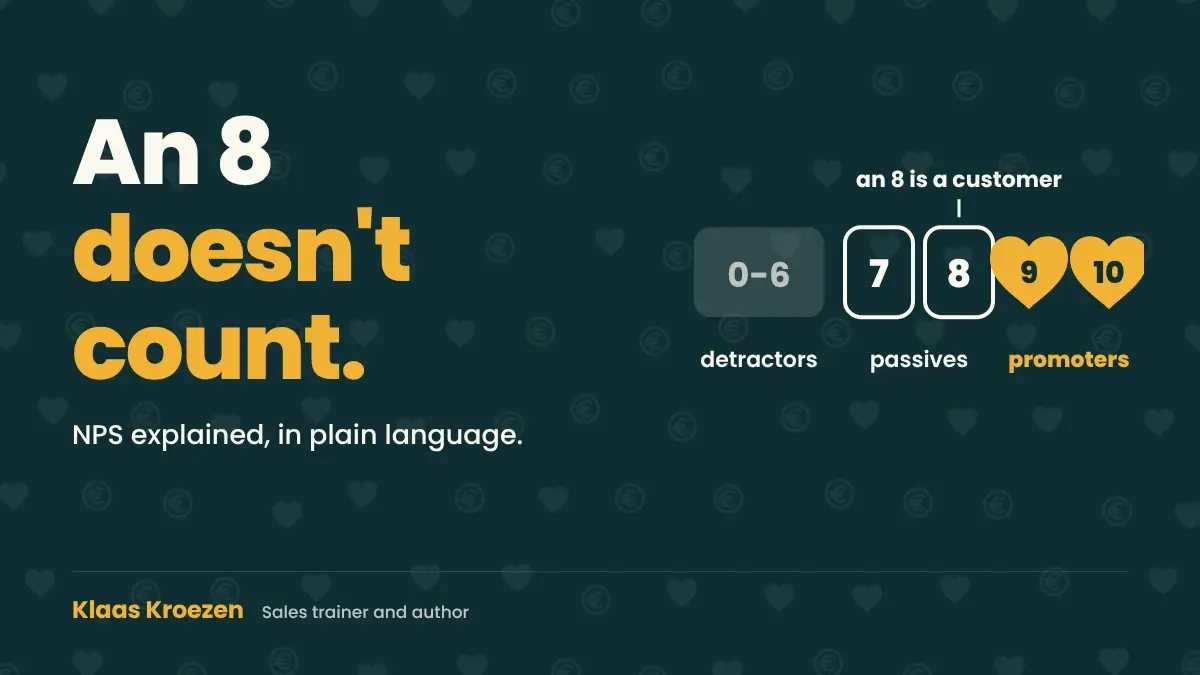
A customer who gives you an 8 is satisfied. But an 8 is a customer, not a fan. They might stay, but they will not expand and they will not recommend you. Real growth comes from the customers who give you a 9 or 10.
That is why it makes sense to measure how customers feel about you. The Net Promoter Score is a well-known way to do that. Why an 8 does not count as a promoter there, you can read in NPS: why an 8 is not a fan.
Who takes care of those three euros?
It is tempting to leave this to the account manager. But the customer sees one company. The colleague who delivers the project, the support colleague who answers their question and the person who sends the invoice all help decide whether they stay and grow.
At my research agency I worked with what I call the golden triangle. Every customer had three people around them: an account manager, a subject expert and me as director. All three were involved before someone became a customer, so there was nothing to hand over. For every customer we made a Customer Success Plan: what is going well, where can we improve, how do we deliver more value? With large customers we discussed it with the customer every quarter. That is how I could serve well over a hundred customers.
That is why more and more companies have customer success managers: people who make sure customers actually get results. How they sell without being salespeople, you can read in sales for customer success managers.
Do the sums
Grab a calculator and look at your own business. What happens to your revenue if:
- your customers stay one year longer on average,
- they buy a little more each year,
- and one in five customers brings someone in?
Usually that effect is greater than anything a new campaign can deliver. And it takes less energy, because you are building on trust that is already there.
My new Dutch book Van klant naar fan (From customer to fan) is about exactly this: what happens after the sale, and how you turn customers into fans with the whole team.
Which customer gave you their first euro last year, and when did you last ask them how things are going? Call them this week.
A customer's first euro is not the end of the funnel. It is the beginning.
What growth from your existing customers can deliver
Frequently asked questions
What does from one euro to three mean?
That a customer's first purchase is only the beginning. A customer who is helped well stays longer, buys more and recommends you. That way the same customer eventually brings in a multiple of their first euro.
How do you upsell without pushing?
By helping the customer so well that expanding is the logical next step. Regularly review together what your work has delivered and where the opportunities are. Then the request for more often comes from the customer.
Why is customer retention so valuable?
In 1990 Fred Reichheld (Bain & Company) and Earl Sasser showed that losing five percent fewer customers led to 25 to 85 percent more profit in the industries they studied. A customer who stays costs less to serve, buys more and is less sensitive to price.
What is land and expand?
Land and expand means you start small with a customer and then grow together. You first win an initial assignment and expand it as the customer experiences success.
Read also

Klaas Kroezen is an entrepreneur who trains, coaches and speaks. He wrote the #1 Dutch bestseller Sales, Honest & Relaxed and the new book Van klant naar fan (From customer to fan, November 2026). After 25+ years in sales with his own international market research firm, he helps organisations adopt the From customer to fan mindset: selling honestly and relaxed, and turning customers into fans with the whole team.
More about Klaas