The iceberg: why pushing on results changes nothing
Steering on results only changes behaviour at the surface. Discover the six layers of the iceberg and why the deepest layer brings in the most revenue.
- Pushing on results only changes the top, visible layer of behaviour, and in the wrong direction at that.
- Below the water are skills, beliefs, identity and purpose; those layers decide what happens above.
- Start at the bottom with purpose, and behaviour and results change along with it, for good.
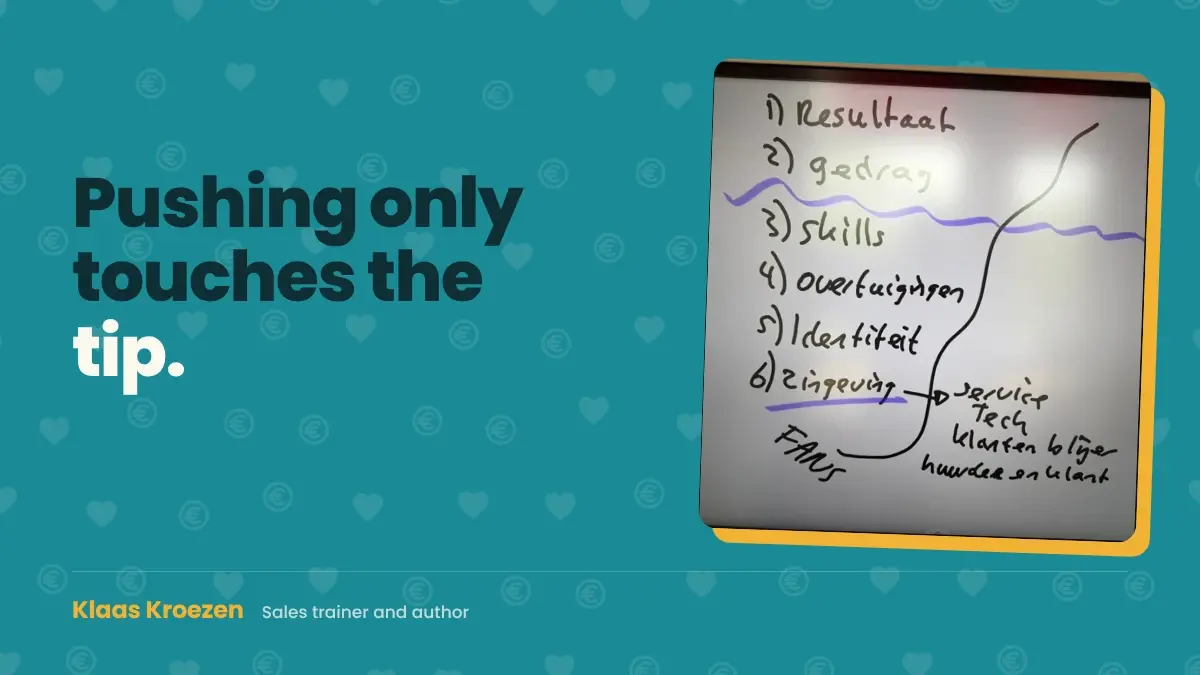
Every month the same ritual. The numbers disappoint, the board shouts "step on it", everyone starts calling harder, and next month we are right back in exactly the same place. That is how it goes in a lot of companies. Let me show you a model that explains why this will never work. And what does work.
The six layers of the iceberg
Picture an iceberg. Above the water you see two things: the result, and the behaviour beneath it. That is what almost every organisation steers on. More calls, more meetings, more pressure. But below the waterline there are four more layers, and those decide what happens above. Just below the surface are your skills: your abilities in listening, asking questions, presenting. Beneath that your beliefs: what you believe deep down about selling, about customers, about yourself. Beneath that your identity: who you are when you talk to a customer. And right at the bottom is purpose: why you do this work.
Why pushing on results does not work
The law of the iceberg is simple: the deeper you make a change, the bigger the impact on behaviour and ultimately on results. And now you see straight away why pushing does not work. Pressure on results only changes the top layer, and in the wrong direction at that. Because that pressure seeps inwards. People start thinking "I have to, I have to, I have to sell", unconsciously select a tense, pushy version of themselves, and the customer feels that from miles away. The focus shifts from helping the customer to plugging the gap in the forecast. Exactly the energy that costs deals instead of winning them.
Start at the bottom with purpose
Turn it around and start at the bottom. Ask yourself: what is purpose in this work for me? Almost everyone I ask that question arrives at a variation of the same thing: helping the customer so well that they get excited and move forward. That is where the real energy is. Whoever works from that layer naturally selects a different version of themselves: honest and relaxed. And then behaviour and results change along with it, for good.
The iceberg is the psychology behind the Customer Experience Model. Want to make the switch with your team? In an inspiration session we go through the whole iceberg in two and a half hours, until everyone feels it too. Or start today with yourself, with the question from the bottom layer: why do you do this work?
The deeper you make a change, the bigger the impact on behaviour and ultimately on results.

Klaas Kroezen is an entrepreneur who trains, coaches and speaks. He wrote the #1 Dutch bestseller Sales, Honest & Relaxed and the new book Van klant naar fan (From customer to fan, November 2026). After 25+ years in sales with his own international market research firm, he helps organisations adopt the From customer to fan mindset: selling honestly and relaxed, and turning customers into fans with the whole team.
More about Klaas