What to do when a deal stalls
Your customer was enthusiastic and now it is quiet. Discover why deals stall and how to get them moving again, without pushing.
- A stalled deal almost always started earlier: the urgency was never clear, the decision maker was not at the table, or no concrete next step was agreed.
- Do not push on the decision, add value to it, with the open question: where does this stand for you, and what can I help with?
- If the timing really is wrong, accept that with respect; a no or a not-now is information, not rejection.
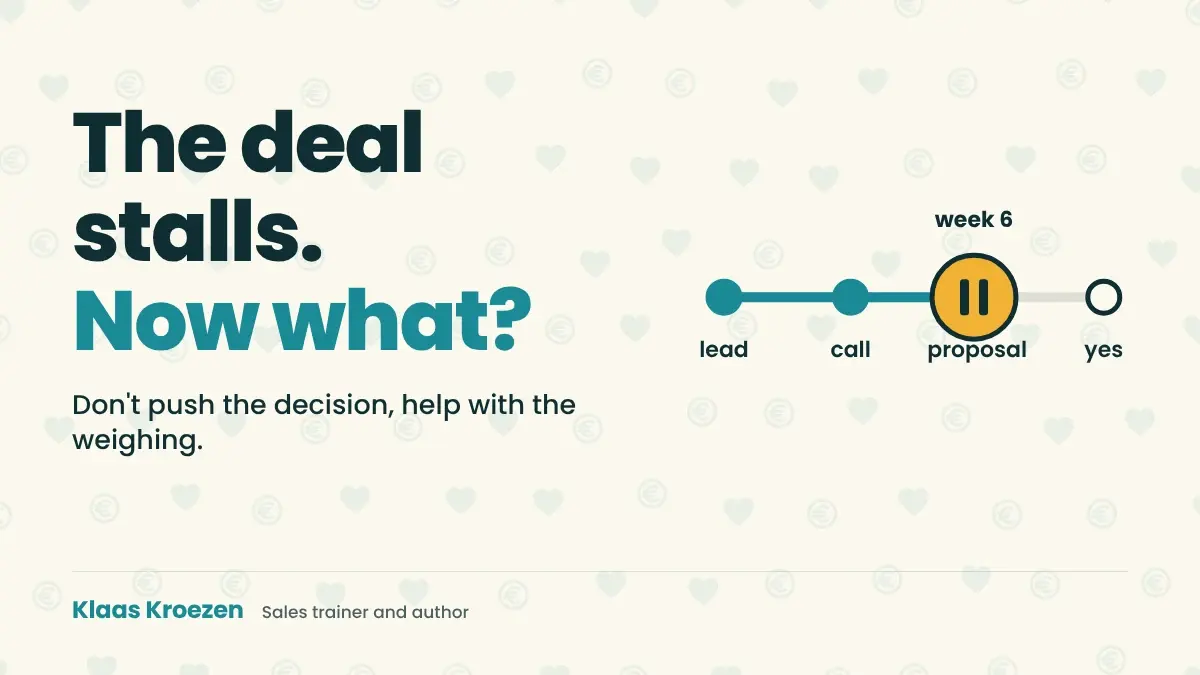
The conversation was good, the proposal out the door, the customer enthusiastic. And now: silence. Weeks slide by, you send another email, and the deal stalls. Not dead, but not alive either. What do you do?
Why a deal stalls
First an honest look back, because a stalled deal almost always started earlier in the process. The most common causes: the urgency was not really clear (the problem is annoying, but not annoying enough), the decision-maker was not at the table (your contact still has to convince someone internally, and cannot manage it), or simply no concrete next step was agreed. That last one is the classic: a proposal sent off into the void, with no moment to discuss it in the diary.
How to get a stalled deal moving again
What now? Go back to the core: helping. So do not push on the decision. Add value to the consideration. Call and ask the open question: "Where do things stand for you, and what can I help with?" Often you then hear the real obstacle, and that is gold. Does your contact still have to convince someone internally? Help them with a short summary of the business case, or offer to meet with the decision-maker together. Has the urgency dropped? Make the impact concrete again: what does it cost to leave things as they are for another six months?
Sometimes the timing of the deal really is wrong
And sometimes the answer is: the timing really is wrong. Accept that with respect. A no or a not-now is simply information. Agree when you will be in touch again, keep sending something valuable now and then, and let it go. The energy you spend pulling at a dead deal is better spent helping customers who are ready now.
Prevention is the real work: clear stages, a concrete next step after every contact, and follow-up that adds value. That is the element process from the Customer Experience Model. Open your pipeline today: which deal has no next appointment in the diary? Call that customer first.
Veelgestelde vragen
Why do deals stall?
Almost always because of something earlier in the process: the urgency was never really clear, the decision maker was not at the table, or no concrete next step was agreed after the proposal.
How do you get a stalled deal moving again?
Go back to helping instead of pushing. Call and ask the open question: where does this stand for you, and what can I help with? If your contact still has to convince someone internally, help them with a short summary of the business case or offer to speak to the decision maker together.
When do you let a deal go?
When the timing genuinely is wrong. Agree when you will be in touch again, send something valuable now and then, and put your energy into customers who are ready now.
Lees ook


Klaas Kroezen is ondernemer die traint, coacht en spreekt. Hij schreef de #1 bestseller Sales, Oprecht & Ontspannen en het nieuwe boek Van klant naar fan (november 2026). Na 25+ jaar sales vanuit zijn eigen internationale marktonderzoeksbureau helpt hij organisaties met de mindset Van klant naar fan: oprecht en ontspannen verkopen, en met het hele team van klanten fans maken.
Meer over Klaas