Sales for customer success managers: retention is the new sales
As a customer success manager you sell every day, you just call it something else. Read why retention is the new sales and how you turn customers into fans.
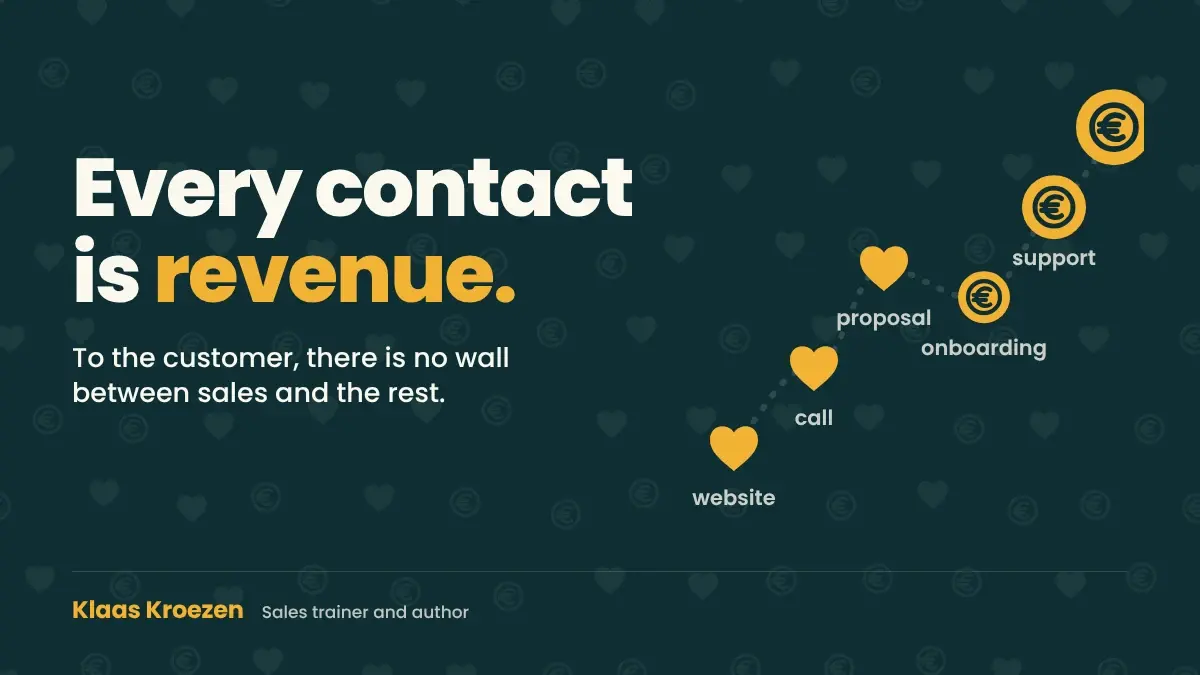
- A customer success manager sells every day: every contact helps decide whether a customer stays, expands and recommends you. Retention is the new sales.
- The difference from customer service is the attitude: service is reactive, customer success sees problems coming before the customer calls.
- Agree with the customer what success means in three, six and twelve months, and keep showing that value.
A customer success manager makes sure customers actually get results from what they bought. That means you sell every day, even if you are not in the sales team. Every contact helps decide whether a customer stays, expands and recommends you.
Retention is the new sales.
Why is retention the new sales?
Many companies still mainly steer on new customers. Yet most of the value often sits with the customers you already have. In 1990 Fred Reichheld of Bain & Company and Earl Sasser showed that losing five percent fewer customers led to 25 to 85 percent more profit in the industries they studied. Profit, not revenue.
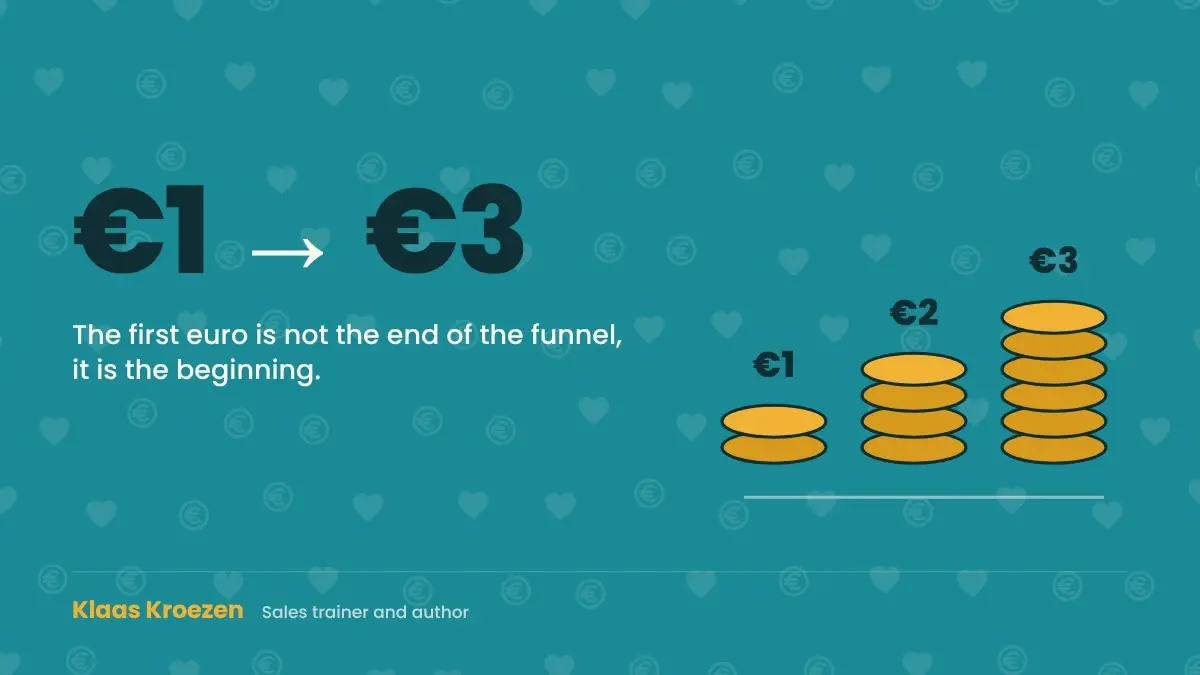
On top of that, a customer who experiences success with your solution is open to more. You do not need to push. They trust you and see you as a partner. That is the most pleasant form of new revenue I know, for the customer and for you.
I worked out how that adds up in from one euro to three.
How is it different from customer service?
The difference is mainly in the attitude.
| Customer service | Customer success |
|---|---|
| Waits for the customer to call | Gets in touch first |
| Solves today's problem | Sees next month's problem coming |
| Measures how fast a ticket is closed | Measures whether the customer reaches their goal |
| Responds to a complaint | Prevents the complaint |
Customer service matters. But if all you do is put out fires, you are always too late. By then the customer is already frustrated.
As a customer success manager you look ahead. You track progress. You notice that a customer is using your service less, or that a new team does not get it yet. And you call before it becomes a problem.
What does success mean for your customer?
This is where it often goes wrong. You know what you sold, but do you know what the customer wants to achieve?
Customers do not pay for your product. They pay for what it delivers. So you need to know what that is. Such a conversation at the start of a partnership might go like this (an example, not a real customer):
You: "Imagine we look back together a year from now. When would you be really happy?" Customer: "If my team spent less time on reports." You: "How much less? And how would you notice?" Customer: "Half would be great. I'd see it in the overtime at the end of the month."
Now you have something concrete. You can steer on that.
How to approach three, six and twelve months
- Agree the goal. Ask what the customer wants to have achieved in three, six and twelve months. Make it as measurable as you can.
- Look back together every three months. What has been achieved? What is not working yet? These conversations are worth their weight in gold.
- Show the value. Customers quickly forget what things were like before they worked with you. Show them, in figures or in examples.
- Look ahead together. In a good review, the next steps often come up by themselves. Expansion is then a logical result of what you have achieved together.
At my research agency we made a Customer Success Plan for every customer: what is going well, where can we improve, how do we deliver more value, and what do we need to innovate? With large customers we discussed it every quarter, with smaller ones once or twice a year. Best of all is to put every contact moment in the diary right at the start. Then you never have to wonder later whether it is time to get in touch.
And end every conversation with one question: "When would suit you to talk about this further?" That way the next moment is already set, and your customer never has to think: what now?
How do you spot a customer about to drop out?
Customers who leave rarely say so in advance. So you have to spot the signs yourself. Watch out for things like:
- Your regular contact leaves or moves to another role.
- The customer uses your service less than before.
- Emails are answered later or more briefly.
- A recurring meeting keeps getting moved.
See something like that? Do not wait for the renewal. Call, and ask honestly how things are going.
Fred Slagter, former SVP of customer success at Betty Blocks, gave me another tip. He looks at the customers who are going well first, and only then at the customers who could do better. Start with what is stuck and you are straight into frustration. Start with what works and you see what you can take to the customer where it is not working yet.
How do you create fans as a customer success manager?
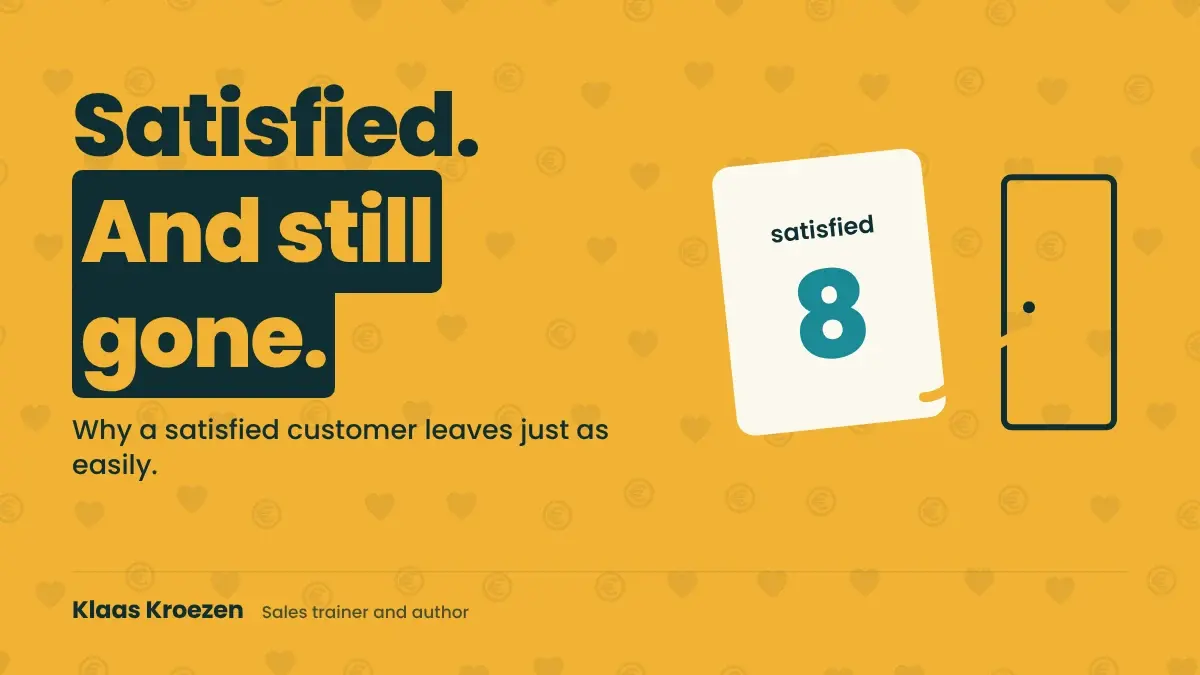
An 8 is a customer. A 9 or 10 is a fan. The difference often lies in small things you do not strictly have to do.
Call to congratulate them on a milestone. Send an article you read that fits their question. Introduce them to someone in your network who can help them further. Customers remember moments like that.
And when something goes wrong? That is exactly when you can make the difference. Be quick, acknowledge what went wrong and fix it. A complaint that is handled well often builds more trust than a year without problems. In my new Dutch book Van klant naar fan (From customer to fan), I use the LEVER method from my first book for this: Listen, Empathise, Verify and Respond. And then come back to it to ask whether it was resolved to their satisfaction.
"But I'm not a salesperson, am I?"
I hear that a lot from customer success managers. And it is true, you are not a salesperson in the classic sense. You do not have to pitch or negotiate.
But you do decide whether a customer renews. Whether they expand. Whether they recommend you to a colleague. That is selling, just in a way that suits you better: by helping well.
Once you see that, something changes. You also dare to have the conversation about expansion, because you know it helps the customer.
Which skills do you need?
Everything you need for this is in the Customer Experience Model. Honest and relaxed as your attitude. Then your beliefs, your content, your process and your form. The model applies to you just as much as to the account manager, because customer experience is sales.
Want to know how satisfied your customers really are? Then also read how to measure customer satisfaction. And if you want to grow in this with your team, take a look at the Customer Success Training, made for everyone with customer contact.
Which customer are you speaking to this week? Ask them: "What would have to happen this year for you to give us a 10?"
Customers do not pay for your product. They pay for what it delivers.
Veelgestelde vragen
What does a customer success manager do?
A customer success manager makes sure customers actually get results from what they bought. They track progress, spot problems early and show what the partnership delivers. That way customers stay longer and expand.
Is customer success the same as sales?
No, but it is closer to sales than many people think. A customer success manager does not pitch, yet they decide whether a customer renews, expands and recommends you. That is revenue.
What is the difference between customer service and customer success?
Customer service is reactive: you help when the customer calls with a problem. Customer success is proactive: you see problems coming and work with the customer on their goals.
Why is retention the new sales?
Because keeping and growing a customer is worth far more than constantly looking for new ones. In 1990 Fred Reichheld (Bain & Company) and Earl Sasser showed that losing five percent fewer customers led to 25 to 85 percent more profit in the industries they studied.
Lees ook

Klaas Kroezen is ondernemer die traint, coacht en spreekt. Hij schreef de #1 bestseller Sales, Oprecht & Ontspannen en het nieuwe boek Van klant naar fan (november 2026). Na 25+ jaar sales vanuit zijn eigen internationale marktonderzoeksbureau helpt hij organisaties met de mindset Van klant naar fan: oprecht en ontspannen verkopen, en met het hele team van klanten fans maken.
Meer over Klaas