Measuring customer satisfaction: why satisfied customers still leave
How do you measure customer satisfaction, and why does a customer who gives you an 8 still walk off to a competitor? On CSAT, NPS, real conversations and listening as a habit.
- Customer satisfaction tells you how a customer feels today, not whether he will stay or recommend you.
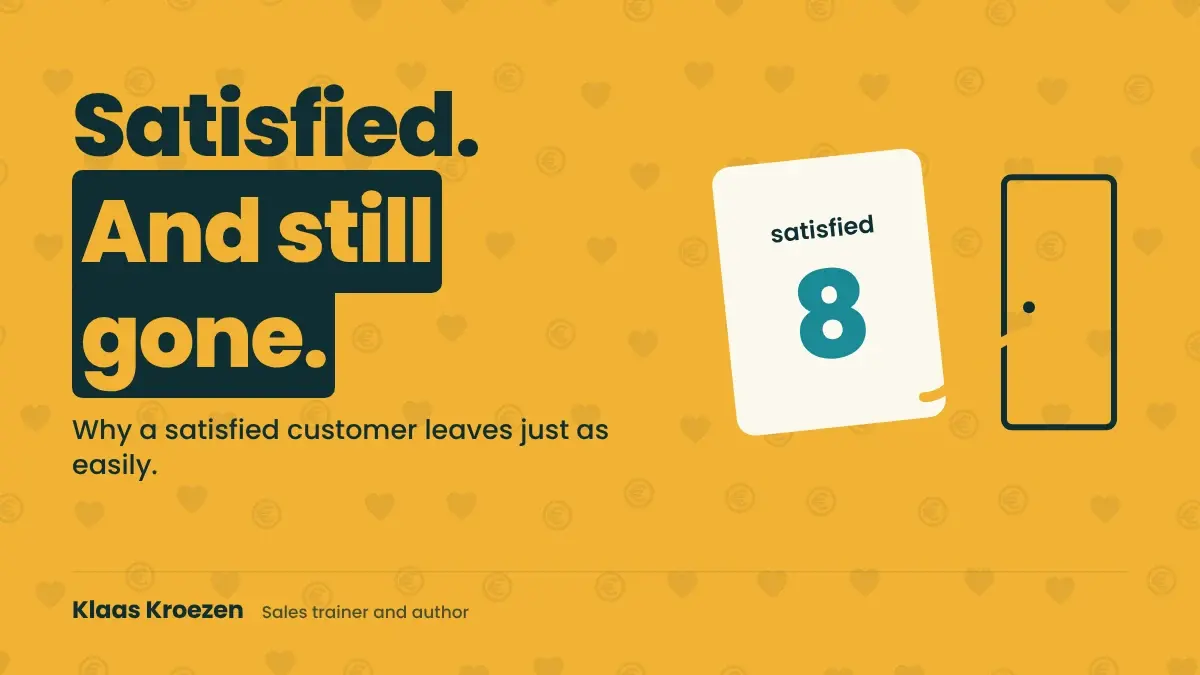
- A satisfied customer who gives you an 8 switches to a competitor just as easily. A fan does not.
- Measuring only works if you also listen and show what you did with the answers.
I spent years in the kitchen of customer satisfaction.
In 2008 my brother and I founded an international market research agency. We grew to 21 countries, with clients such as Google, Samsung, Microsoft, Bol and ING. For fifteen years we watched hundreds of thousands of customers go through a real customer journey, at banks, insurers, telecom and energy companies and online shops. I saw up close how big brands looked at their customers. Which questions they asked. And what they did with the answers.
My biggest insight from that time: almost everyone measures customer satisfaction. Far fewer companies actually do something with it.
What is customer satisfaction?
Customer satisfaction is the extent to which a customer feels you did what he expected. You delivered on time, the product worked, the invoice was correct. Fine.
But look closely at that definition: what he expected. Customer satisfaction measures whether you cleared the bar. Not whether you went over it.
How do you measure customer satisfaction?
There are plenty of ways. These are the three I come across most often.
| Method | What you ask | What it tells you |
|---|---|---|
| CSAT | How satisfied are you with this contact or product? | How a customer experienced a single moment |
| NPS | How likely are you to recommend us (0-10)? | Whether someone says they would recommend you |
| Fanscore | Nine statements, including: have you recommended us in the past six months? | Whether someone is a fan, in behaviour too |
| Conversation | What went well, what could be better, what are you missing? | The why behind the score |
CSAT (Customer Satisfaction Score) is the best known. After a call, a delivery or a support question, you get a short question: how satisfied are you? Useful for tracking individual moments.
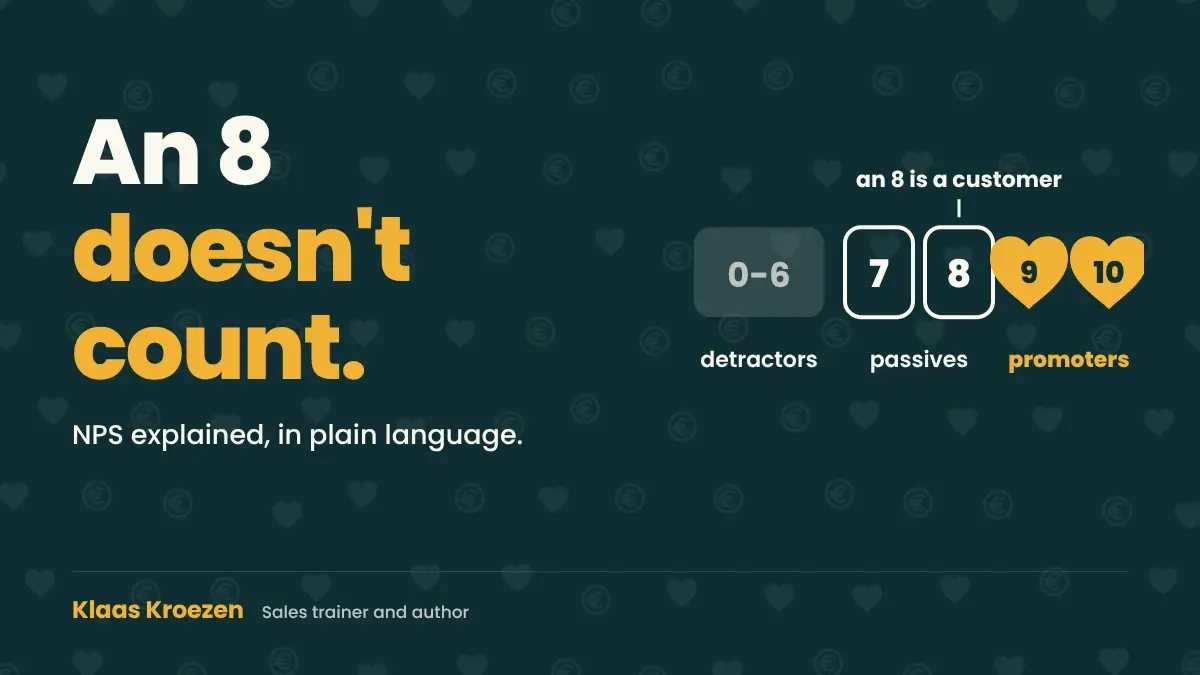
NPS (Net Promoter Score) was created in 2003 by Fred Reichheld of Bain & Company, in Harvard Business Review. You ask how likely someone is to recommend you, on a scale of 0 to 10. A 9 or 10 is a promoter. A 7 or 8 is passively satisfied. A 0 to 6 is a detractor. You can read more in NPS: why an 8 is not a fan.
The Fanscore is something I developed myself. Your customer scores nine statements, such as "I trust them completely". The NPS question is included, plus one yes/no question: "I have recommended them in the past six months." So you see not only whether someone would recommend you, but whether they actually did.
Conversations are the method used least. And in my view the most important. A score tells you that something is going on. A conversation tells you what.
Why does a satisfied customer still go elsewhere?
You may know the feeling. A customer gives an 8. Everything in order. And six months later he is gone.
How is that possible?
An 8 means: I have nothing to complain about. It does not mean: I cannot do without you. A satisfied customer has no reason to leave. But he has no reason to stay either. When a competitor comes along with a slightly lower price or a slightly handier portal, the step is a small one.
A fan does not take that step so quickly. A fan feels seen. He trusts you. He knows you will take him by the hand when things get difficult. That is why I write in my new book: an 8 is a customer. A 9 or 10 is a fan. And you make that difference.
That difference is worth money. Harvard Business Review calculated that winning a new customer costs 5 to 25 times as much as keeping an existing one. So customer retention does not start with satisfaction. It starts with fans.
Everything is right, and still a 6
My new Dutch book Van klant naar fan (From customer to fan) has a chapter called "Everything is right, and still a 6".
That title comes from one of the best studies we ever did. We gave a hundred customers of each health insurer the same task: a baby has been born, add it to your policy online. It covered the four biggest insurers in the Netherlands.
It worked at all four. No website crashed, every form did its job. And yet three insurers scored an 8 or higher, and one stayed just above a 6.
The difference? With the high scores the screen said something like "What wonderful news, congratulations", with balloons around it. With the low score it said: "Add your child below." That was all.
That is because the customer experience does not live in your process alone. It lives in how someone feels when dealing with you. Was he heard? Did someone take him by the hand? Or was he handled neatly and correctly, as a number?
You can do everything right and still not create fans. That is hard to hear. But it is also good news, because it means the difference often lies in small, human things.
Listening as a habit
Measuring only makes sense if you listen. And listening is not an annual survey. It is a habit.
A big report that you discuss once and then put in a drawer changes very little. What does work: doing something every week with what customers tell you.
This is how you make listening a habit:
- Call one customer every week. Not a sales call. Ask: what is going well, and what would you like to be different?
- Ask more on a 7 or 8. Ask: what would need to happen for a 9? The answer is often surprisingly concrete.
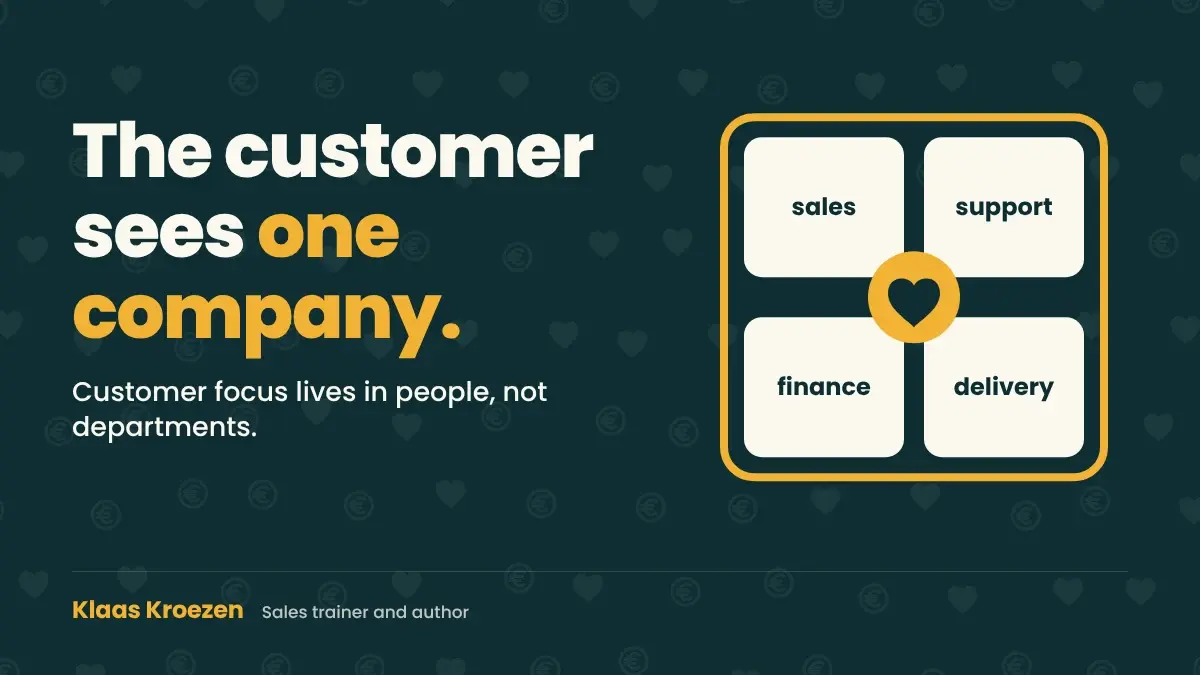
- Share what you hear with your team. Including colleagues who never speak to customers themselves. Your customer sees one company.
- Tell the customer what you did with it. That is the moment a customer feels taken seriously.
Measure where you stand yourself
Measuring customer satisfaction is about your customer. But you make the difference between an 8 and a 9 yourself, with your team. So it is worth looking inwards too.
That is why I created the Customer Experience Model. It starts from two basic attitudes, honest and relaxed, and four skills: beliefs, content, process and form. Together they decide whether a customer stays a customer or becomes a fan.
With the free scan you see in a few minutes where you and your team stand. Joost did the same. After a month of focused work he was 21.7% better at sales, measured with the same model.
Want to know more about the step from satisfied to fan first? Read what a fan actually is or how to put customer focus into practice.
My question for you: which customer last gave you an 8? Call him this week and ask what it would take to get a 9.
An 8 is a customer. A 9 or 10 is a fan. And you make that difference.
Veelgestelde vragen
What is customer satisfaction?
Customer satisfaction is the extent to which a customer feels you did what he expected. It says something about how he feels right now, but little about whether he will stay or recommend you.
How do you measure customer satisfaction?
Common methods are a CSAT question (how satisfied are you, for example on a scale of 1 to 5) and the NPS question (how likely are you to recommend us, 0 to 10). Always combine a score with a real conversation, because that is where you hear why.
Why do satisfied customers still leave?
Because satisfied is not the same as committed. A customer who gives you an 8 has no reason to complain, but also no reason to stay when someone else offers something slightly cheaper or easier.
What is the difference between customer satisfaction and NPS?
Customer satisfaction asks how satisfied someone is. NPS asks whether someone would recommend you. In NPS a 7 or 8 does not count as a promoter, only a 9 or 10 does.
Lees ook


Klaas Kroezen is ondernemer die traint, coacht en spreekt. Hij schreef de #1 bestseller Sales, Oprecht & Ontspannen en het nieuwe boek Van klant naar fan (november 2026). Na 25+ jaar sales vanuit zijn eigen internationale marktonderzoeksbureau helpt hij organisaties met de mindset Van klant naar fan: oprecht en ontspannen verkopen, en met het hele team van klanten fans maken.
Meer over Klaas